
"Where Exactly Is Bir?" — The Local's Guide to Every Village, Colony, and Locality in the Bir Area
- Jun 6
- 4 min read
Updated: Jun 7
If you've ever tried to book a stay in Bir and ended up confused about whether you're near the landing site, the monastery, the market, or some village you've never heard of — you're not alone and it's not your fault.
"Bir Billing" sounds like one place. It is however (as you may have already found out) not one place. It's a collection of distinct villages that have merged into a single tourist identity, and knowing which is which will genuinely change how you navigate your trip.
Here's the breakdown, from someone who's been here long enough to know every lane.

Billing — The Takeoff, Not the Town
Start here because it trips up the most people. Billing is 14 kilometres up the mountain from Bir, at 2,400 metres above sea level. It's the paragliding launch site — meadow, wind, a few chai stalls, and views that make the 40-minute drive worth it even if you never fly.
There is no accommodation in Billing. No restaurants. There are a couple of nice dhabas and some chai and maggi shops, but that's about it.
You go up for the launch or the view, and you come back down. The name "Bir Billing" refers to this launch-to-landing connection: Billing is where you take off, Bir is where you land.

Bir Khas — The Actual Bir Village
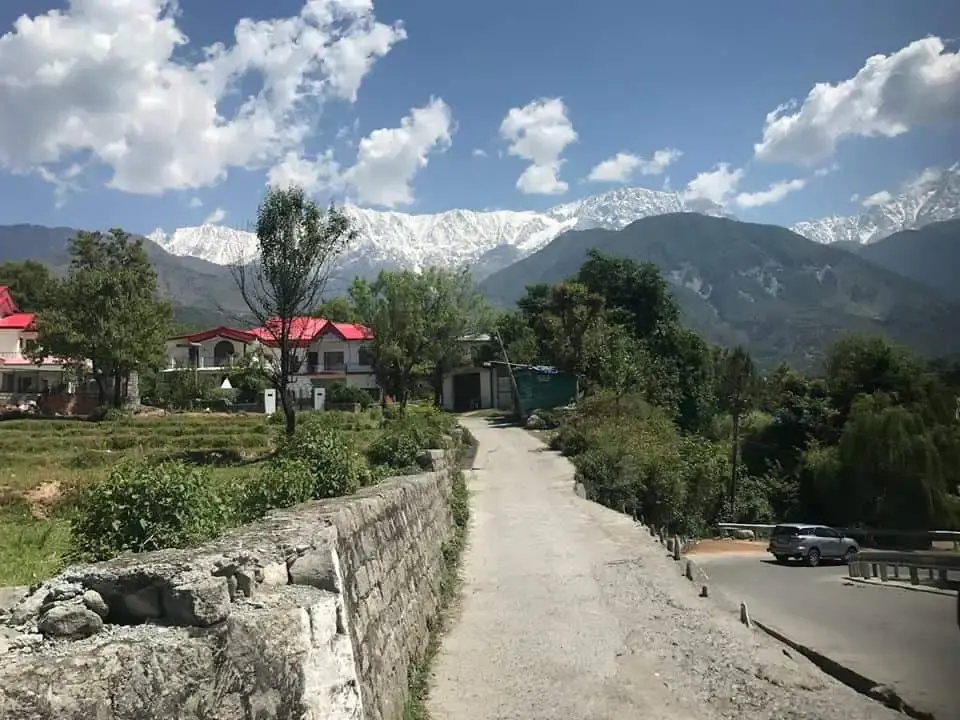
This is what "Bir" originally meant before paragliding made the name famous. Bir Khas is the old Himachali village — local families, the Bir Bazaar, the tea factory, and a history that predates tourism entirely.
Many of the pilots who put Bir on the international paragliding map are from Bir Khas, which is exactly why the name "Bir" attached itself to the landing area nearby. The village has its own character, distinct from the Tibetan Colony crowd, and it's worth walking through slowly.
Chougan — Where Most Tourists Actually Are
When someone says "I'm staying in Bir," they usually mean Chougan (also spelled Chaugan or Chowgan). This is the busy end: the landing field, the cafes, the guesthouses, the Tibetan market.
It sits on the southern edge of the broader Bir area and is where the energy concentrates. Narrow lanes, motorcycles, monks, travellers — it's lively and sometimes congested.

The Tibetan Colony — Chougan's Heart
Within Chougan sits the Tibetan Colony, one of the earliest Tibetan refugee settlements in India, established in 1962 by families from the Kham region of eastern Tibet.
This is where Chokling Monastery lives, where the large stupa anchors the settlement, and where the Deer Park Institute draws students and scholars from around the world.
Chauntra — The Second Tibetan Settlement
About 4 kilometres from the main Bir area, Chauntra is a separate Tibetan refugee community with its own monasteries and schools.
The Dzongsar Khyentse Chökyi Lodrö Institute (also called Dzongsar Shedra) — a massive monastery and monastic college — is located here.
Chauntra also sits on the national highway toward Joginder Nagar, which makes it a common transit point people pass through without realising it has its own identity.
Tea gardens once covered much of the area where the Tibetan settlement now stands.

Keyori (Keori) — Past the Landing Site
Cross the Bir stream just beyond the paragliding landing area and you're in Keyori. Narrower roads, pine forest behind the village, small tea gardens on the slopes, fewer tourists.
The Ghodnala area sits within the Keyori zone — more forest, more quiet. If you want to be close to the action but not inside it, Keyori works well.

Suja — Further Downhill
Below Keyori, Suja is quieter still. The author finds it especially nice for a scooty ride in nice weather, and also for long weekend walks.
A proper local village with terraced fields and views back up toward the ridge. Not many tourists make it here unless they're walking the valley trails.

Gunehar — The Other Direction
Go opposite from the landing site and you hit Gunehar. This is the village that leads to the Bangoru Waterfall— one of the most-visited natural spots near Bir.
Gunehar also has Kahani Ki Dukaan, a community library in a traditional mud house that runs arts workshops for local kids. Worth a visit if you have a morning free.
Lahar, Damehar, Matru, Sukhbaag — The Quieter Periphery
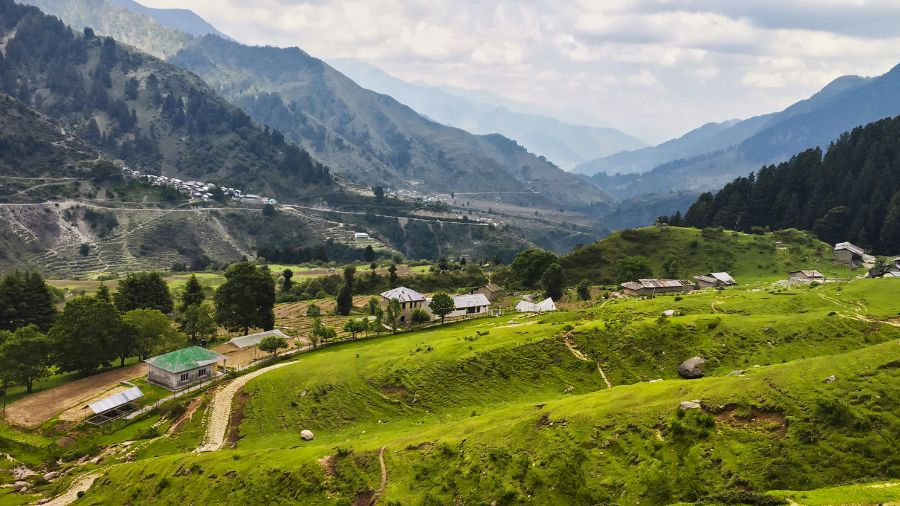
These are the villages most visitors never find but sometimes stumble into while walking or biking the valley roads.
All local, all genuinely off the tourist trail, and all worth wandering through if you want to see what the Bir area looks like when it's just going about its day.
This is also where our nature resort Moonshine Villa is located.

Bhattu — The Monastery Village
Bhattu is where Palpung Sherabling Monastery sits — one of the largest and most impressive monasteries in the region, with a resident community of senior lamas and a three-year retreat programme.
It's technically a separate village from the main Bir cluster but is always included in the Bir orbit.
Chauntra to Bir Road — The Arrival Sequence
Most people arriving by road pass through Chauntra first, then hit Chougan Chowk — the junction where the road splits toward the paragliding landing area (1.5km) and the takeoff point at Billing (16km from this point).
The cluster of shops at the junction is the best place for provisions at decent prices. And then Bir Khas, the original village, sits further up from there.
Why Any of This Matters
If you're booking a stay, knowing whether you want to be in the Tibetan Colony buzz, the quieter lanes of Keyori, or the Bir Khas village end makes a real difference to your trip. Most online listings just say "Bir" — which could mean any of the above.

Moonshine Villa sits in the heart of the Bir area, close enough to the landing site to be convenient and local enough to feel like you're actually in the valley rather than the tourist strip.
Our team knows every village on this list — by name, by shortcut, and by season. If you're trying to figure out where to be and what's near what, just ask us when you check in.
Stay at the best resort in Bir Billing, where we eat, breathe and live the Bir Life.


Comments